
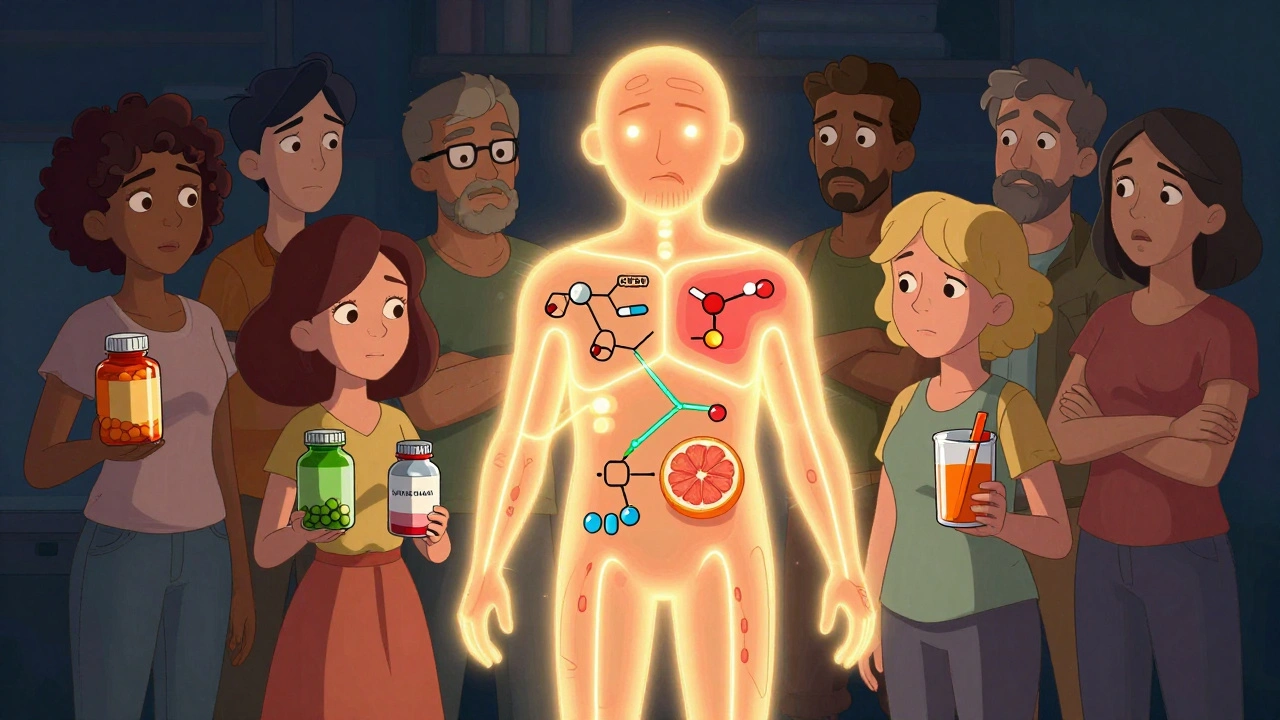
Starting a new medication can feel like a leap into the unknown. You might be told to take it once a day, but what if that pill reacts badly with something else you’re already taking? It’s not just about the drug itself-it’s about how it talks to everything else in your body. Drug interactions are more common than most people realize, and they can turn a simple treatment into a serious health risk. In fact, about 3 to 5% of all outpatient prescriptions involve a clinically significant interaction. For people taking five or more medications, that number jumps to nearly one in three. If you’re over 65, you’re even more at risk-over 40% of adults in that age group are on multiple drugs, and many of those combinations are dangerous when not managed properly.
What Exactly Is a Drug Interaction?
A drug interaction happens when one substance changes how another works in your body. This isn’t just about pills mixing-it includes supplements, herbal products, even foods and alcohol. There are two main types: pharmacokinetic and pharmacodynamic.
Pharmacokinetic interactions affect how your body absorbs, breaks down, or gets rid of a drug. The most common culprit is the liver enzyme CYP3A4. It handles about half of all clinically important interactions. For example, if you’re taking simvastatin (a cholesterol drug) and amlodipine (a blood pressure pill), your doctor must limit simvastatin to 20 mg per day. With diltiazem or verapamil, that limit drops to just 10 mg. Why? Because these blood pressure meds slow down how fast your body clears simvastatin, letting it build up to toxic levels. That can lead to muscle damage, kidney failure, or worse.
Pharmacodynamic interactions are about effects-what the drugs do together. Take blood thinners. If you’re on a direct oral anticoagulant (DOAC) like apixaban and also get a low molecular weight heparin (LMWH) shot, your bleeding risk doesn’t just go up a little-it spikes by 300 to 400%. Same with opioids and promethazine. Together, they can crush your breathing. That’s not a side effect-it’s a life-threatening combo.
High-Risk Combinations You Need to Know
Some interactions are so dangerous they’re textbook red flags. Here are a few you should never ignore:
- Warfarin + Amiodarone: Amiodarone, used for irregular heart rhythms, can make warfarin way more powerful. Doctors usually cut the warfarin dose by 30 to 50% right away and check your INR (a blood test for clotting) within 3 to 5 days. Weekly checks for the next month are standard.
- MAO inhibitors + Tyramine-rich foods: If you’re on phenelzine (Nardil) or another MAOI, avoid aged cheeses, cured meats, tap beer, and fermented soy. Just one serving of blue cheese (with 2-5 mg of tyramine) can send your blood pressure soaring past 200 mmHg. That’s a hypertensive crisis-stroke territory.
- St. John’s Wort + Antidepressants or Immunosuppressants: This popular herbal remedy for mild depression can slash blood levels of cyclosporine (used after transplants) by up to 60%. That means your body might reject the new organ. It also interferes with birth control, SSRIs, and even some HIV meds.
- Simvastatin + Grapefruit Juice: Even one glass of grapefruit juice can double the amount of simvastatin in your blood. It’s not just the juice-whole grapefruits and Seville oranges do the same thing. Switch to pravastatin or rosuvastatin if you like citrus.
These aren’t rare cases. The HIV Drug-Drug Interaction Guide lists 147 high-risk pairings, and 72% of them involve CYP3A4. That’s why pharmacists are now key players in medication safety-they spot 40 to 60% more potential problems than doctors alone.
How to Protect Yourself
You don’t need to be a doctor to keep yourself safe. Here’s what you can do right now:
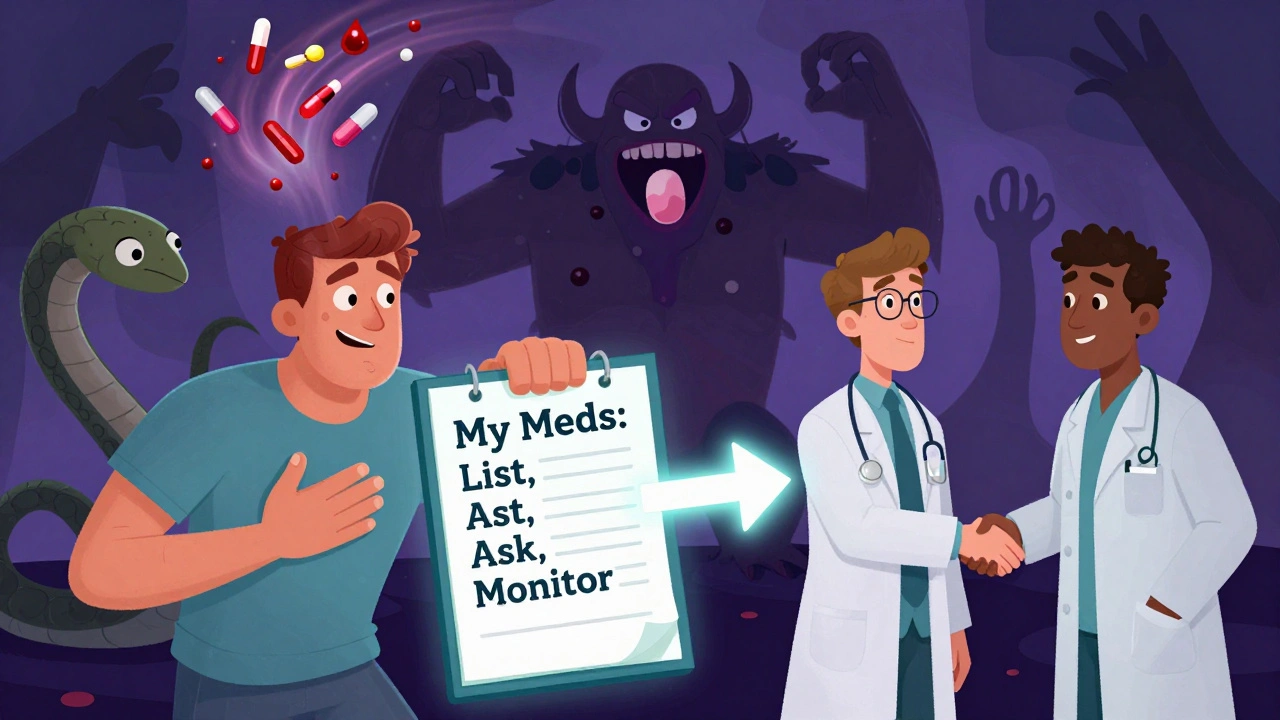
- Make a full list of everything you take. Not just prescriptions. Include vitamins, herbal supplements, over-the-counter painkillers, and even recreational substances. Write down the dose and how often you take it. Keep this list in your wallet or phone.
- Bring it to every appointment. Don’t assume your doctor knows what you’re taking. Many patients don’t mention supplements because they think they’re “harmless.” They’re not. A 2022 study found 68% of patients never told their provider about herbal products.
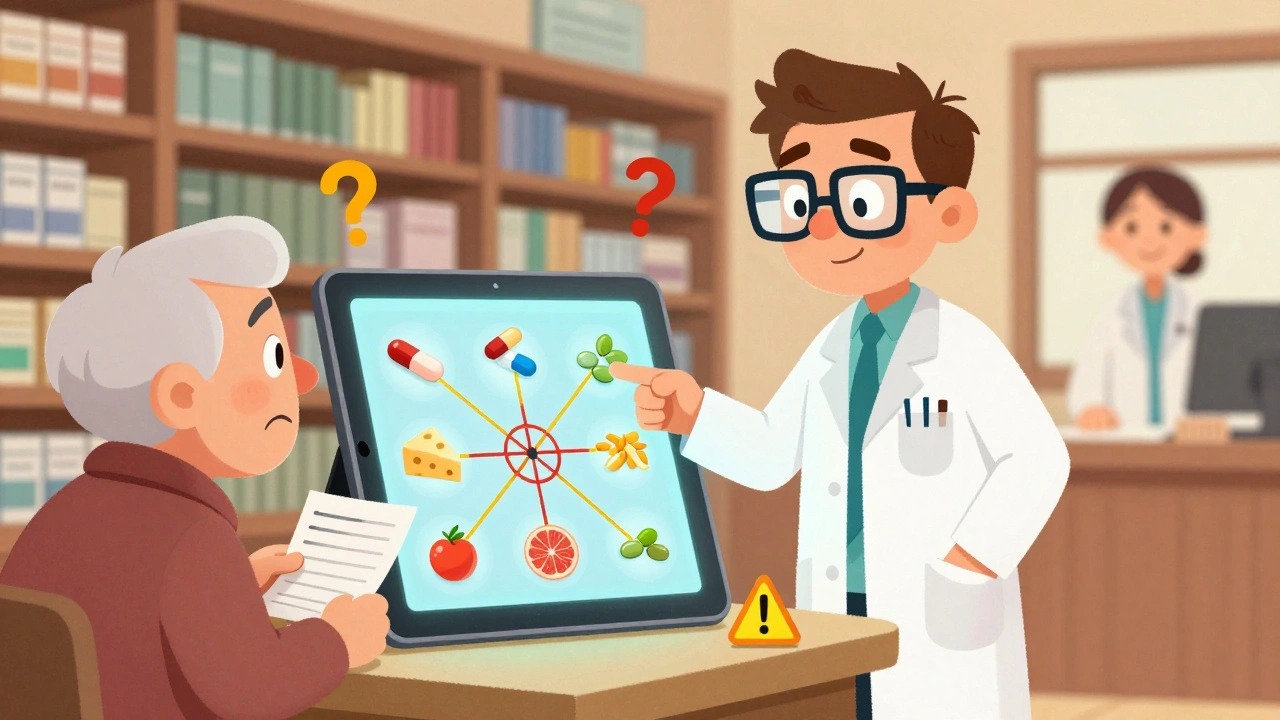
- Ask the pharmacist. When you pick up a new prescription, ask: “Could this interact with anything else I’m taking?” Pharmacists are trained to catch these things. They’ll check your entire history across all pharmacies you’ve used.
- Know your warning signs. If you start a new drug and suddenly feel dizzy, unusually tired, have unexplained bruising, muscle pain, or trouble breathing-stop and call your provider. Don’t wait. Early detection saves lives.
What Your Doctor Should Be Doing
Good care means more than just writing a prescription. Your doctor should be following evidence-based steps:
- Review your meds every 3 to 6 months. If you’ve been on the same list for years, it’s time to ask: Do you still need all of them? Reducing unnecessary pills cuts interaction risk by 15 to 25%.
- Check for alternatives. Is there a safer drug that won’t clash? For example, instead of simvastatin with amlodipine, switch to pravastatin or fluvastatin. They don’t rely on CYP3A4.
- Use monitoring tools. For high-risk combos like warfarin and amiodarone, INR checks are non-negotiable. For others, blood tests for liver or kidney function might be needed.
- Coordinate with specialists. If you’re seeing multiple doctors, they need to talk. A 2024 pilot program by the AAFP found that when primary care and specialists communicate within 48 hours of a new high-risk prescription, adverse events drop by 18%.
Electronic health records should warn doctors about interactions-but they often don’t. A 2023 JAMA study found physicians ignore 90 to 95% of drug interaction alerts. Why? Too many false alarms. But here’s the fix: high-severity alerts (like contraindicated combos or 50% dose reductions) are followed 75% of the time. That means if your system flags something as “contraindicated,” it’s not a mistake-it’s urgent.
What You Should Avoid
Some myths are dangerous. Don’t believe these:
- “I only take one prescription, so I’m fine.” Even one new drug can interact with supplements, food, or alcohol. Grapefruit juice + statins is a classic example.
- “Natural means safe.” St. John’s Wort, kava, garlic supplements-they all interfere with medications. Just because it’s sold in a health store doesn’t mean it’s harmless.
- “I took it once and felt okay, so it’s fine.” Some interactions build up over days. You might feel fine on day one, then crash on day four.
- “I don’t need to tell my doctor about my cannabis or alcohol use.” Alcohol with benzodiazepines or opioids? Deadly. Cannabis with blood pressure meds? Can cause dangerous drops in pressure. Be honest.
What Happens If You Ignore This?
Ignoring interactions isn’t just risky-it’s costly. Drug interactions are the third most common cause of medication errors, behind wrong dose and wrong drug. The Institute for Safe Medication Practices reports they lead to 18.7% of all medication error reports. In the U.S., these errors cause an estimated 150,000 to 200,000 serious events each year. That’s hospitalizations, ER visits, organ damage, even death.
And it’s not just about health. The cost? $1.2 to $1.8 billion a year in avoidable healthcare spending. Hospitals are now being penalized if more than 15% of their Medicare patients are on high-risk combinations. That’s why more clinics are requiring pharmacist reviews for anyone on five or more medications.
Final Thoughts: Be Your Own Advocate
Medication safety isn’t just your doctor’s job-it’s yours too. You’re the one who takes the pills. You’re the one who knows what you’ve eaten, what you’ve skipped, and how you’ve felt. Don’t wait for your doctor to ask. Bring your list. Ask the hard questions. Say: “Is this safe with everything else I’m taking?”
If you’re on multiple drugs, especially if you’re over 65, ask for a full medication review. Ask if a pharmacist can help. Ask if there’s a simpler, safer option. And if you ever feel off after starting something new-don’t brush it off. Call your provider. It’s better to be safe than sorry.
Medications can save your life. But only if you know how they behave-not just alone, but together.
Can I still take supplements when starting a new medication?
Not without checking. Many supplements, like St. John’s Wort, garlic, ginkgo, and fish oil, can interfere with medications. St. John’s Wort can cut the effectiveness of birth control, antidepressants, and transplant drugs by up to 60%. Always tell your doctor or pharmacist about every supplement you take-even if you think it’s harmless.
How long does it take for a drug interaction to show up?
It varies. Some reactions happen within hours-like a sudden drop in blood pressure with alcohol and blood pressure meds. Others build up over days or weeks. For example, warfarin and amiodarone interactions can take 2 to 4 weeks to peak. That’s why monitoring is critical: don’t assume you’re fine just because you feel okay on day one.
Do over-the-counter painkillers interact with prescription drugs?
Yes, and often dangerously. NSAIDs like ibuprofen or naproxen can increase bleeding risk if you’re on blood thinners. They can also strain your kidneys if you’re on ACE inhibitors or diuretics. Even acetaminophen can be risky if you drink alcohol regularly or have liver disease. Always check with your pharmacist before taking OTC meds with prescriptions.
What should I do if my doctor prescribes a drug I know interacts with something I’m taking?
Ask for clarification. Say: “I read this combination can be risky. Is there an alternative?” or “Can we monitor for side effects more closely?” Most doctors are open to alternatives. For example, if simvastatin and amlodipine are a problem, pravastatin is a safer statin option. Never stop a medication without talking to your provider-but do push for a safer plan.
Can I use a smartphone app to check for drug interactions?
Apps can help, but they’re not foolproof. Many miss rare or complex interactions, especially those involving supplements or food. They also don’t know your full medical history-like kidney or liver function. Use them as a first check, not a final answer. Always confirm with a pharmacist or your doctor. The most reliable tool is still a trained professional reviewing your full list.
Why do I keep getting alerts from my pharmacy about interactions I’ve taken before?
Because your situation changes. Even if you took simvastatin and amlodipine last year, your kidney function might have dropped since then. Or you started a new supplement. Or your dose changed. Pharmacists are programmed to flag every possible interaction because safety is about context-not just the drug names. Don’t ignore the alert. Ask: “Has anything changed in my health or meds since last time?”



One comment
Just started a new beta-blocker last week and already had to call my pharmacist because I was feeling lightheaded. Turned out it was mixing with my fish oil supplement. Never would’ve guessed. Always bring your full list - even the ‘harmless’ stuff. This post saved me from a bad day.
Oh, so now we’re treating patients like pharmacokinetic equations? Brilliant. Let’s just automate the entire healthcare system and replace doctors with algorithm-driven pharmacy bots. Because clearly, human judgment is the problem here, not the fact that 90% of EHR alerts are false positives.
I really appreciate how thorough this is. I’ve been on five meds for years and never realized how much my grapefruit juice was messing with my cholesterol pill. I switched to oranges last month - no more muscle aches. Small change, huge difference. Thanks for laying it out so clearly.
Pharmacists are the unsung heroes of polypharmacy. They’re the ones catching the CYP3A4-mediated interactions that EMRs miss because the alerting system is trained on outdated thresholds. If you’re on >4 meds, insist on a med rec by a clinical pharmacist - it’s not optional, it’s standard of care.
They don’t want you to know this - but the FDA, Big Pharma, and your doctor are all in on it. The real reason they don’t warn you about interactions? It’s not about safety - it’s about profit. Every interaction = more ER visits = more pills sold. They profit from your confusion. St. John’s Wort? It’s cheaper than SSRIs. That’s why they ban it in 12 countries. Don’t be fooled.
One must lament the degeneration of the medical discourse into a series of bullet-pointed admonitions, devoid of any substantive engagement with the epistemological underpinnings of pharmacological risk. One is left to wonder whether the proliferation of such lists constitutes genuine patient empowerment, or merely a performative gesture of clinical diligence.
bro i just took 2 ibuprofen with my blood pressure med and felt fine… but now i’m paranoid 😅 maybe i should’ve checked. this post is wild but 100% needed. i’m printing this and taping it to my pill organizer. thanks.
...And yet, despite the fact that this post is meticulously researched, factually accurate, and cites peer-reviewed studies - it still fails to address the systemic collapse of primary care in America, where patients are left to self-manage polypharmacy because their doctor only has 7 minutes per visit. So yes, here’s a list. But who’s gonna fix the system that makes this list necessary?
Bring your list. Ask the pharmacist. Call if you feel off. That’s it.
I work in a rural clinic in India. Many patients take ayurvedic herbs with their blood pressure or diabetes pills. We don’t have fancy apps or EHR alerts. So we sit with them, ask simple questions, and write everything down on paper. This post says the same thing - but in a way that works anywhere. Thank you.
One wonders whether the implicit utilitarianism of this post - reducing patient agency to a checklist of compliance - actually reinforces the very medical paternalism it claims to oppose. Is the patient truly an advocate, or merely a diligent executor of pharmacological orthodoxy?
It is, of course, entirely predictable that such a document would emerge in a society where pharmaceutical literacy has been systematically eroded by commodified healthcare and the commodification of wellness. One cannot help but observe the tragic irony: the very population most vulnerable to drug interactions is also the least equipped to navigate the labyrinthine pharmacopeia.
This isn’t just advice - it’s a lifeline. My mother died from a warfarin-amiodarone interaction because her cardiologist didn’t check her supplements. She took St. John’s Wort ‘for anxiety.’ No one asked. No one looked. This post? It’s the reason I now carry a laminated list of every med I take - and I make sure every doctor sees it. Don’t wait for tragedy. Do this now.