
Medication Dry Mouth Risk Calculator
No medications added yet
Select medications to see your risk level
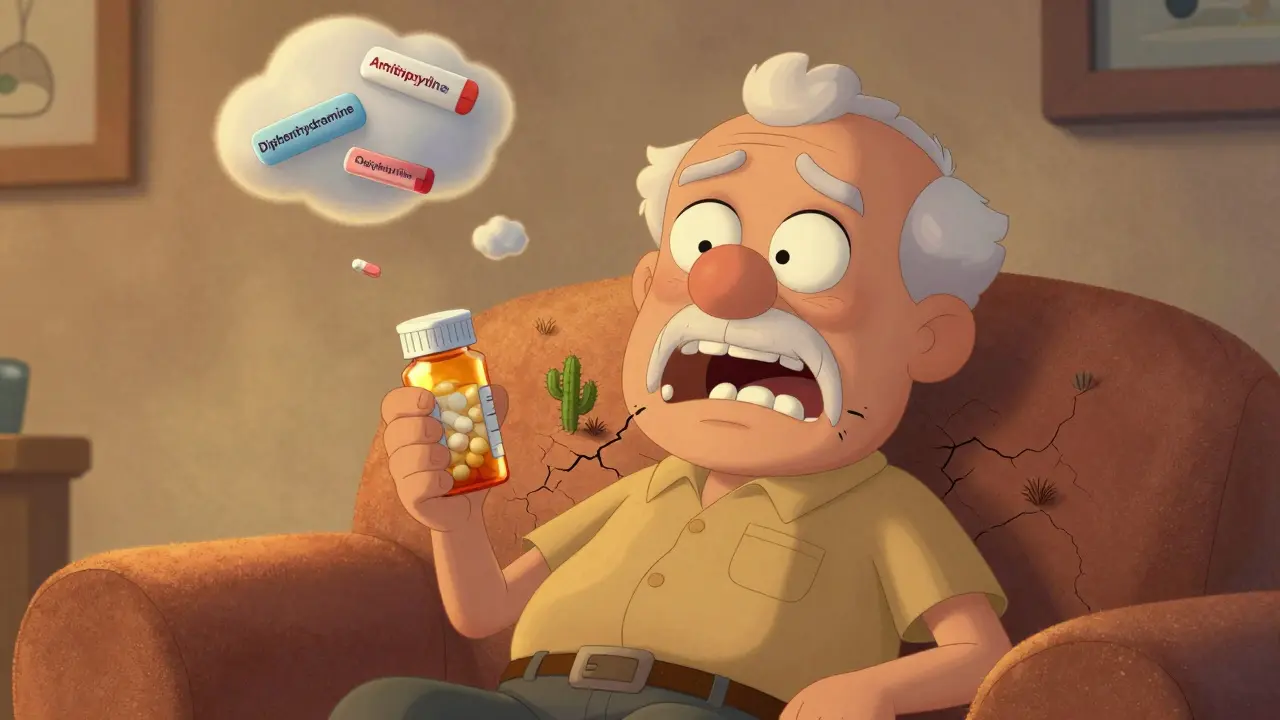
When you start a new medication, you expect side effects like drowsiness or upset stomach. But dry mouth? That’s one of the most common-and least talked about-problems. If you’ve been reaching for water constantly, struggling to swallow food, or noticed your teeth feel more sensitive than usual, it might not be coincidence. It’s likely your meds.
More than 1,100 prescription and over-the-counter drugs can cause dry mouth, also called xerostomia. That’s not a rare side effect-it’s the #1 oral complaint among people on multiple medications. In the U.S., about 11 million cases of dry mouth are directly linked to drugs, according to the CDC. And it’s not just annoying. Left unchecked, it can wreck your teeth, make eating painful, and even lead to infections.
Why Your Medications Are Drying You Out
Your saliva doesn’t just help you chew and taste. It’s your mouth’s natural defense system. It washes away food, neutralizes acids, and fights bacteria. But many medications interfere with the nerves that tell your salivary glands to produce it. Most of these drugs work by blocking acetylcholine, a chemical messenger that tells your body to make saliva. This is called an anticholinergic effect.
Think of your salivary glands like faucets. Anticholinergic meds turn the water off. In severe cases, saliva production drops by up to 85%. That’s why people on these drugs often say their mouth feels like cotton.
Here are the main culprits:
- Anticholinergic bladder meds: Drugs like oxybutynin (Detrol) and tolterodine cause dry mouth in over 60% of users.
- First-gen antihistamines: Benadryl (diphenhydramine) affects nearly 6 out of 10 people. Newer ones like loratadine (Claritin)? Only 12%.
- Tricyclic antidepressants: Amitriptyline and nortriptyline cause dry mouth in 63% of users. SSRIs like sertraline are better, but still hit 31%.
- Antipsychotics: Haloperidol causes dry mouth in over half of users. Aripiprazole? Closer to 37%.
- High blood pressure meds: Diuretics and some beta-blockers reduce fluid volume, which cuts saliva flow.
The real danger? Polypharmacy. If you’re taking three or more medications, your risk of dry mouth jumps 2.3 times. Five or more? You’re looking at an 18% chance of near-total saliva shutdown.
What Dry Mouth Actually Does to Your Mouth
Dry mouth isn’t just discomfort. It’s a silent dental emergency.
Without saliva, plaque builds up faster. Bacteria thrive. Acid eats away at enamel. The result? Cavities-especially on the roots of teeth, where gum tissue has receded. People on long-term dry-mouth meds are 300% more likely to develop new cavities within a year. That’s not a guess. It’s from Cleveland Clinic data.
And it’s not just cavities. You’re more prone to:
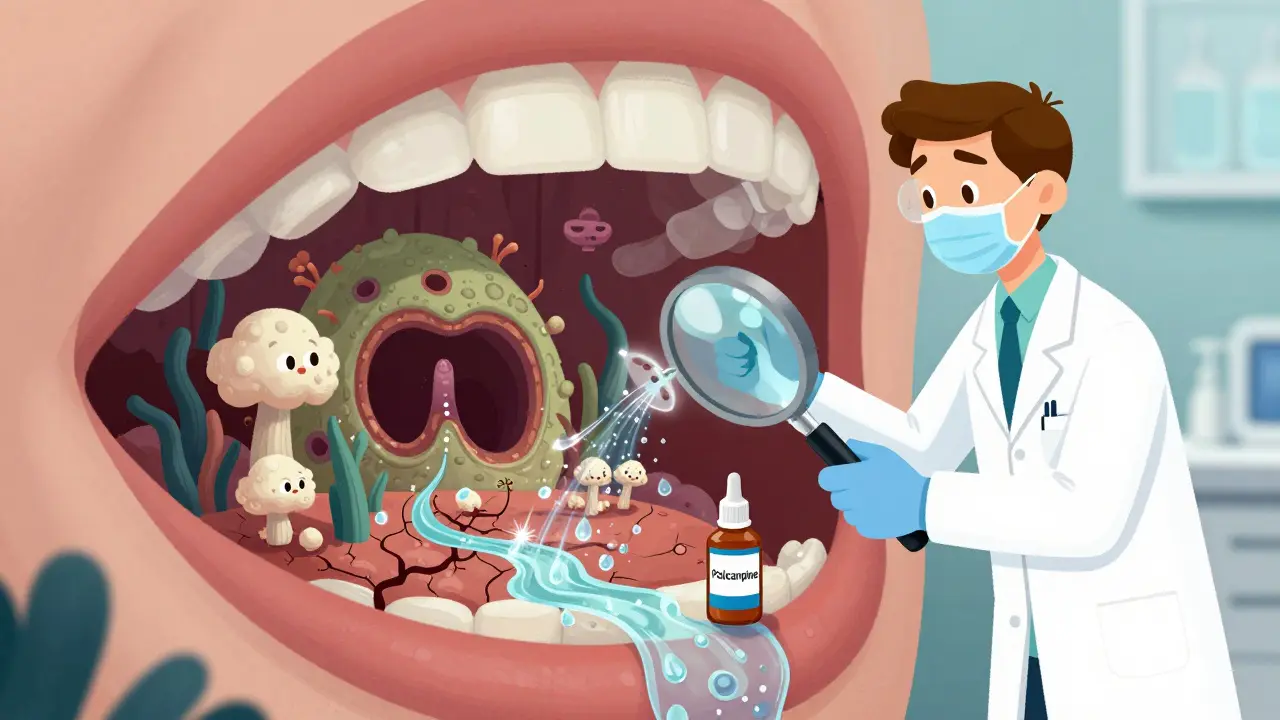
- Oral thrush (fungal infections)
- Sore, cracked lips and tongue
- Difficulty speaking or swallowing
- Bad breath that won’t go away
- Dentures that don’t fit or slip
Older adults are hit hardest. Nearly 76% of dry mouth cases are in people over 65. And 38% of them take five or more prescriptions daily. Yet, only 34% get proper care. Doctors rarely ask about it. Dentists see the damage-but often don’t know it started with a pill.
What You Can Do Right Now
You don’t have to suffer. There are real, proven ways to manage this. Start here:
- Check your meds with your doctor. Not all drugs in a class are equal. Switching from oxybutynin to solifenacin (Vesicare) cuts dry mouth risk from 62% to 49%. Going from diphenhydramine to loratadine drops it from 58% to 12%. Ask: “Is there a similar drug that’s less drying?”
- Use a saliva stimulant. Pilocarpine (Salagen) and cevimeline (Evoxac) are FDA-approved pills that trigger your glands to make more saliva. In trials, they boosted flow by 63-72% in just two weeks. These aren’t over-the-counter, but they’re worth asking for.
- Switch to a prescription oral moisturizer. Regular mouthwash? Avoid it. Alcohol dries you out more. Instead, use products like Biotene Dry Mouth Oral Rinse or Glandosane. These are designed to mimic saliva’s protective enzymes. In studies, 81% of users got 4+ hours of relief. The new Biotene Enzyme-Activated Moisturizing System lasts up to 7 hours.
- Hydrate smartly. Sip water all day. Don’t chug. Keep a bottle at your desk, bedside, and in your car. Sugar-free gum or lozenges with xylitol help too-they stimulate saliva naturally. Avoid caffeine, alcohol, and tobacco. They make it worse.
- Use a humidifier. Especially at night. Dry air pulls moisture from your mouth. A cool-mist humidifier in your bedroom can cut nighttime dryness by half.
When to See Your Dentist (And What They Can Do)
Most dentists now ask about medications during checkups-89% do, according to the ADA. But only 52% feel confident managing dry mouth. That’s on you to speak up.
Ask your dentist for:
- A thorough exam for early decay (especially on root surfaces)
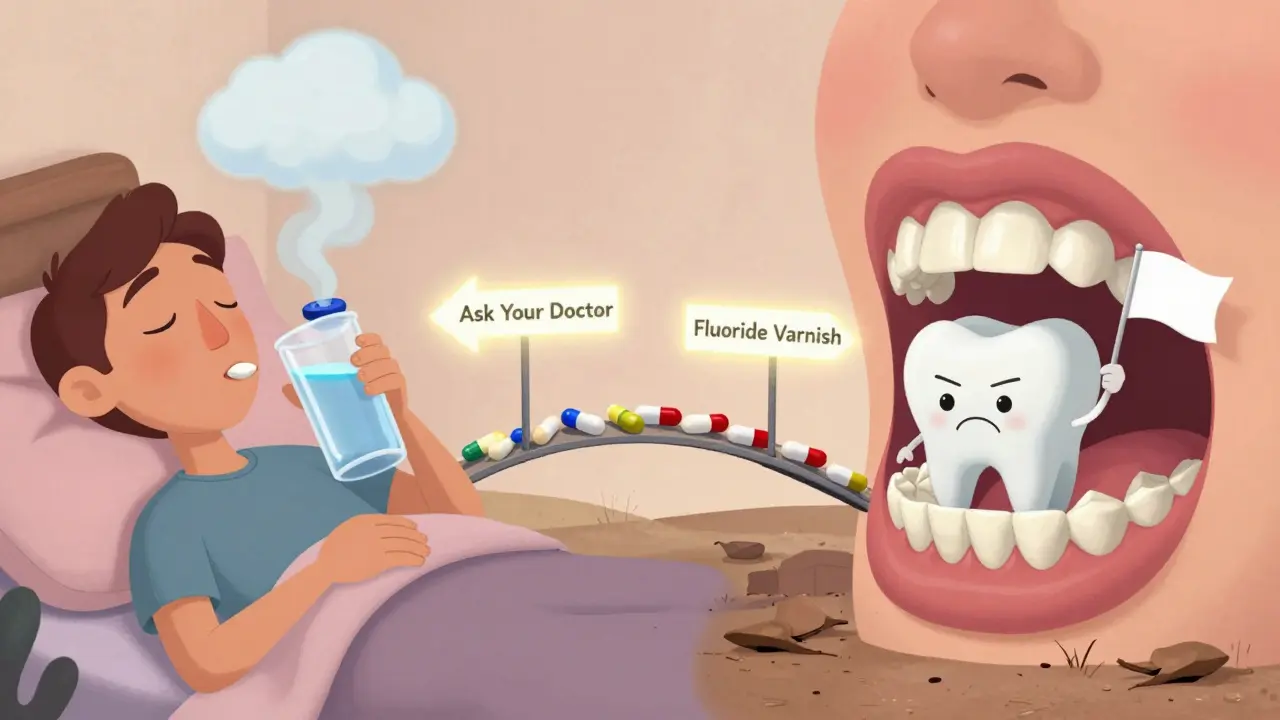
- Fluoride varnish treatments every 3 months (not 6)
- Custom trays for daily fluoride gel application
- Recommendations for non-alcohol mouth rinses
Studies show that when dentists and doctors work together, dental complications drop by 57%. That’s huge. Tell your dentist what meds you’re on. Ask your doctor to coordinate with your dentist. It’s not overkill-it’s essential.
What Doesn’t Work (And Why)
Some fixes sound good but fall short:
- Drinking soda or juice: Sugar feeds bacteria. Even “natural” juices spike acid levels. Stick to water.
- Over-the-counter saliva sprays: Many just add water. They don’t replace enzymes or minerals. They give temporary relief, but no protection.
- Just chewing gum: Helpful, but not enough if you’re on strong anticholinergics. Combine it with other steps.
- Waiting it out: Dry mouth doesn’t improve on its own. The longer it goes untreated, the more damage piles up.
And don’t stop your meds without talking to your doctor. The risk of untreated conditions (like high blood pressure or depression) is far greater than dry mouth. The goal isn’t to quit the drug-it’s to manage the side effect.
What’s Changing in 2026
The tide is turning. In 2023, the FDA approved cevimeline (Evoxac) for severe medication-induced dry mouth. The NIH launched a $15.7 million study to find non-drying alternatives for bladder meds. And 47 health systems now have pharmacist-dentist teams working together to catch this early.
By 2027, the ADA predicts all new medications will need a dry mouth risk label. By 2028, treatment rates could jump from 31% to 68% as insurers start covering saliva stimulants and specialized rinses.
This isn’t just about comfort. It’s about preventing costly, painful dental emergencies. One study found untreated dry mouth leads to 300% more emergency dental visits in a year. That’s hospital trips, root canals, extractions-all preventable.
If you’re on meds and your mouth feels like sandpaper, you’re not alone. And you’re not stuck with it. There are solutions. You just need to ask the right questions-and act before your teeth pay the price.

One comment
Been dealing with this since my antidepressant switch. Biotene rinse saved my life. No more waking up with a mouth like a desert. Also, xylitol gum is my new best friend. 🍬
Let’s be real - dry mouth isn’t just ‘annoying,’ it’s a slow-motion dental massacre disguised as a side effect. The fact that doctors don’t screen for this like they do for weight or blood pressure is criminal. If your meds are turning your mouth into a dust bunny colony, demand alternatives. Your molars will thank you in 2030.
My grandma’s on five meds and barely drinks water. She says it’s ‘just old age.’ I showed her this post. She’s now using the Glandosane rinse and a humidifier. Small wins.
It is with profound respect for the medical literature that I acknowledge the meticulous enumeration of pharmacological etiologies contributing to xerostomia. The statistical rigor presented herein is commendable, and I shall certainly forward this to my attending physician with a formal note of appreciation. Thank you for your scholarly contribution to clinical awareness.
So let me get this straight - we’re being told to sip water like it’s a yoga practice while Big Pharma keeps making drugs that turn our mouths into the Sahara? 😒
Next they’ll tell us to breathe through our noses and stop complaining about the cotton candy in our cheeks.
Stop blaming meds. You’re just dehydrated. Drink more water. Done.
Why is no one talking about how the FDA approves these drugs knowing they cause dry mouth? This is deliberate. They want you to buy more toothpaste, more rinses, more dentures. It’s a money loop. Wake up.
As someone who grew up in a household where ‘drink eight glasses of water’ was the cure-all, I never realized how little that helps when your glands are chemically silenced. The fluoride trays recommendation? Game-changer. My dentist started doing them monthly - no new cavities in two years.
Let me be clear: if you're taking more than three medications and your mouth feels like a desert, you're not a patient - you're a walking pharmaceutical experiment. Americans are overdosing on pills and underdosing on common sense. This isn't 'side effect management.' It's systemic negligence dressed in medical jargon.
Brother, I feel you. My uncle in Nigeria was on blood pressure meds and couldn’t eat his pap without water. We found him a local herb - neem leaf rinse - and it helped a little. Not FDA-approved, but it kept his mouth moist. Sometimes the old ways still work. You’re not alone, and your health matters.
I’ve been on antidepressants for 12 years. Dry mouth? Pfft. I just use a straw. Problem solved. Why are people making such a big deal? It’s just saliva.
THIS IS WHY I HATE DOCTORS! THEY GIVE YOU POISON AND THEN SAY ‘OH JUST DRINK WATER’! MY MOUTH IS ON FIRE AND NO ONE CARES! I’M GOING TO POST THIS ON EVERY SOCIAL MEDIA SITE! #DRYMOUTHMURDER
Thank you for this comprehensive overview. I’m currently reviewing medication regimens for elderly patients in our clinic. The 2.3x risk multiplier with polypharmacy is a critical data point we’ve been underemphasizing. We’re drafting a new screening protocol based on your sources - will share it with our pharmacy team.